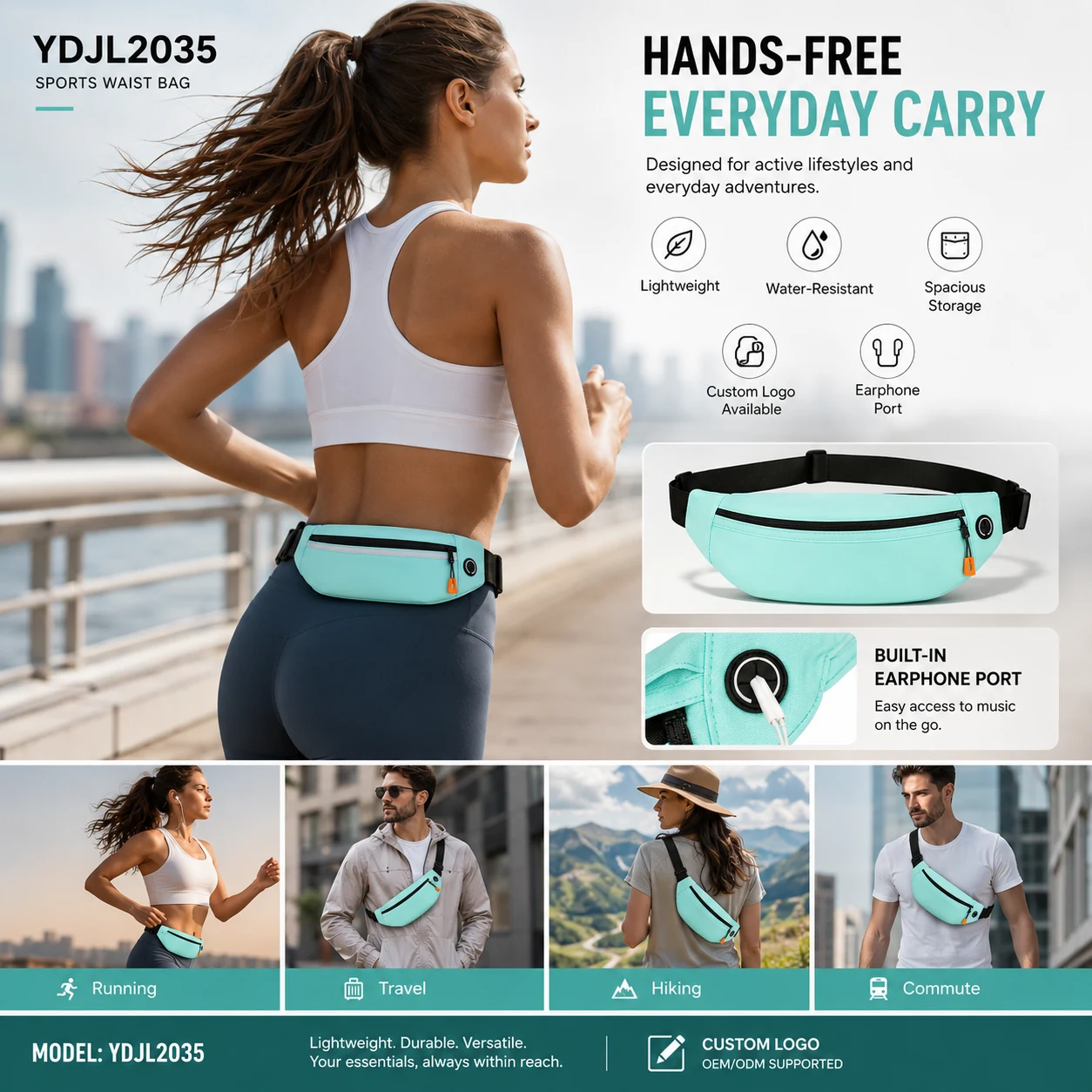
"Waist bag" covers three very different products, and picking the wrong one for your market is an expensive mistake to make in bulk. A gym brand and a streetwear label both want a "custom waist bag," but they should almost never order the same bag. Before you sample anything, it helps to know which of the three main styles actually fits the customer you're selling to.
Here's how they compare — by who buys them, what they do well, and how much room they give you to build a brand.
The slim running belt
This is the stretchy, low-profile belt that disappears against your body while you move. Usually built from Lycra with a thin water-resistant inner layer, it's designed to hold a phone, keys and cards and nothing more. It's not trying to be a bag — it's trying to vanish.
Who it's for: fitness brands, running clubs, gyms, event organizers, and anyone selling into an active-lifestyle audience. It's also a strong promotional product for marathons and sports events, because it's light, cheap to ship, and genuinely used again.
Branding potential: limited surface area, but that's not a weakness if you play to it. A clean logo via screen print or heat transfer, a reflective print for night runs, or a woven label reads as considered and premium. Because the belt is minimal, restraint looks intentional.
Watch out for: fit and comfort matter more here than on any other style. A running belt that bounces or chafes gets thrown in a drawer, so webbing quality and strap adjustment are worth sampling carefully.
The everyday fanny pack
The classic bum-bag shape — a structured nylon or Oxford pack with a front pocket, a main compartment and an adjustable strap. This is the versatile, recognizable silhouette that's been in and out of fashion for decades and is firmly back in.
Who it's for: lifestyle and streetwear brands, promotional and corporate gifting, travel and outdoor retailers. It's the most "everyday" of the three and appeals to the widest audience, which is exactly why it's the shape buyers reorder most.
Branding potential: the best of the three. A flat front panel is a natural canvas for a bold logo, embroidery, a rubber patch or a woven label, and the structured body holds print cleanly. If your brand identity is the point, this shape gives you the most room to express it.
Watch out for: because it's the most common shape, differentiation comes from the details — fabric choice, hardware, color, and finish. A stock fanny pack with a logo looks like everyone else's; custom colors and a considered zipper pull are what make it feel like your brand.
The crossbody / anti-theft waist bag
The larger, do-more style — a roomier Oxford bag that wears three ways (waist, crossbody or across the chest), often with a hidden rear anti-theft pocket and water-resistant fabric. This is the one for people who actually need to carry things and want them secure.
Who it's for: travel brands, urban and commuter audiences, tech and EDC (everyday-carry) buyers, and anyone whose customers value security and capacity over minimalism. The crossbody wearing option has made this style especially popular with younger, city-based buyers.
Branding potential: strong, with a larger surface and more premium construction that supports embroidery, patches and higher-end finishes. The added function (anti-theft pocket, multiple compartments) also gives you a real story to tell, not just a look.
Watch out for: more components mean more to get right — zippers, multiple pockets, the anti-theft panel, strap hardware. This is the style where working with a real factory (rather than a reseller) pays off most, because there's more that can quietly go wrong.
Quick decision guide
- Selling to a fitness / event / running audience? → slim running belt.
- Building a lifestyle or streetwear brand and want logo real estate? → everyday fanny pack.
- Serving travel, commuter, or security-conscious buyers? → crossbody / anti-theft waist bag.
- Not sure yet? → sample the fanny pack. It's the widest-appeal shape and the safest first private-label product for most brands.
You don't have to pick just one forever. Plenty of brands start with the shape that fits their core customer and expand the range once the first order sells through. The important thing is to match the bag to the buyer before you commit to bulk — because the most beautifully made running belt in the world won't move if your customers actually needed a crossbody.
Frequently Asked Questions
Which waist bag style is easiest to brand?
The everyday fanny pack. Its flat front panel and structured body give the most room for logos, embroidery, patches and labels, which is why it's the most reordered shape for private-label brands.
What's the difference between a running belt and a fanny pack?
A running belt is a slim, stretchy, low-profile band built to hold just a phone and keys while you move. A fanny pack is a larger, structured pack with real compartments for everyday carry. Different buyers, different use cases.
Are crossbody waist bags and chest bags the same thing?
Often, yes — many larger waist bags are designed to wear three ways: at the waist, across the body, or on the chest. The "crossbody" and "chest bag" labels usually describe the same adjustable-strap product worn differently.
Can I private-label more than one style at once?
You can, though each style is a separate product with its own sampling and minimum. Many brands start with the single shape that fits their core customer, then expand the range after the first order proves out.