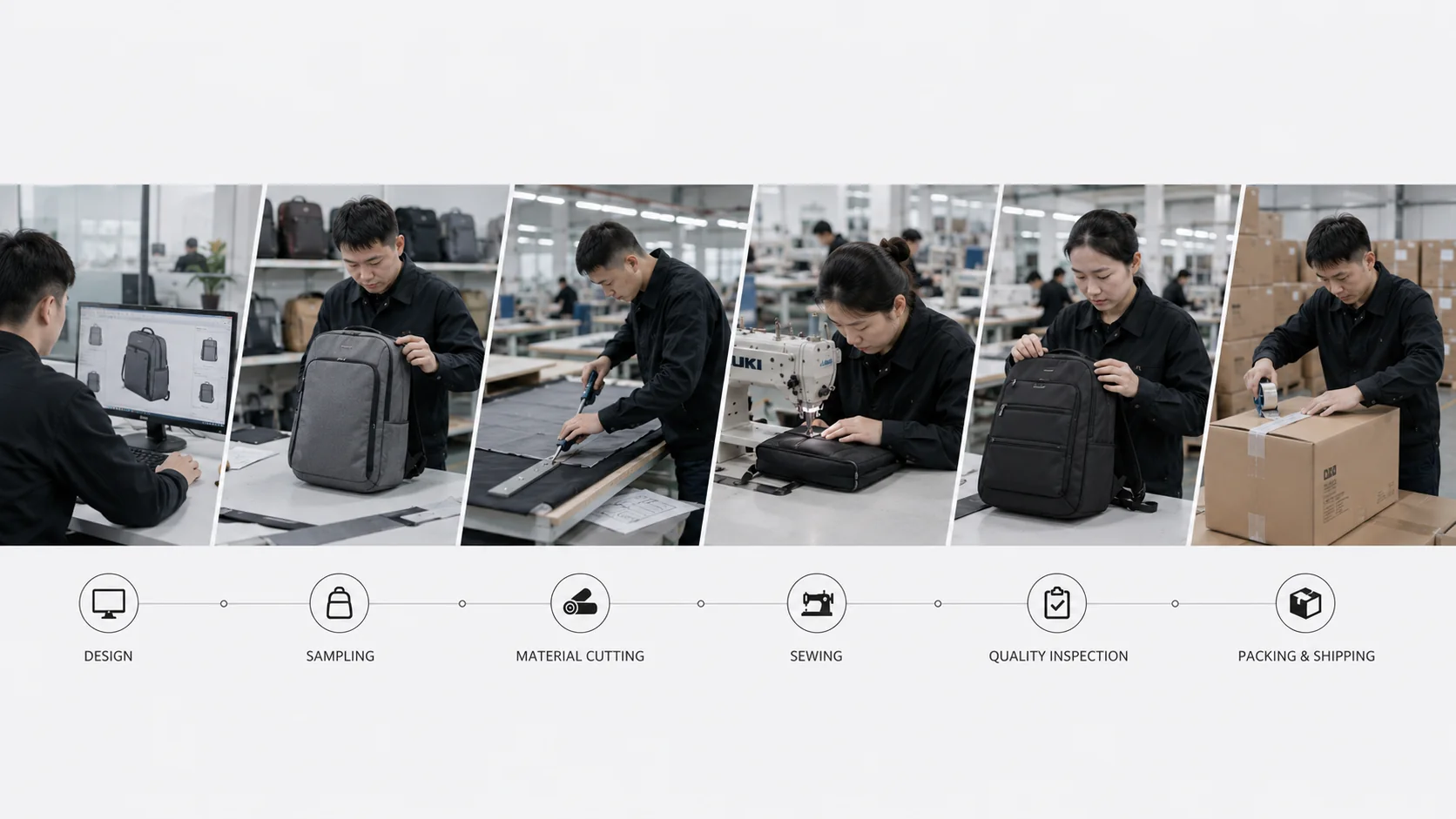
Customizing a waist bag comes down to three decisions: how your brand goes on it, what it's made of, and how many you order. Get those three right and the rest tends to fall into place. This guide explains each one in plain terms, so you can walk into a supplier conversation knowing what to ask for.
Branding methods: how your logo goes on
There's no single "best" way to brand a bag — there's the right method for your artwork, your fabric and your budget. Here are the ones that matter, and when to use each.
Screen printing. The everyday choice for a bold, one- or two-color logo on a flat panel. Cost-effective at volume and clean-looking, it's the default for most simple branding. Less suited to fine gradients or photographic artwork.
Heat transfer. When your logo has full color, gradients or fine detail that screen printing can't hold, heat transfer carries it. Great for vibrant, complex artwork; the trade-off is a slightly different hand-feel than a printed-in logo.
Embroidery. A textured, stitched finish that instantly reads as premium. Best on sturdier panels — a structured Oxford fanny pack takes embroidery beautifully, while a thin stretch belt doesn't. Ideal when you want the bag to feel high-end.
Woven labels and private labels. Durable, professional and repeatable — the standard for brand tags, care labels and a consistent private-label identity across reorders.
Rubber / PVC patches. Flexible, three-dimensional and visually strong. Popular on sport and tactical styles where a rugged look suits the product.
Metal badges, custom zipper pulls and Pantone dyeing. These are the details that separate a genuine private-label product from a stock bag with a sticker. A custom zipper pull, a metal logo badge, or a body dyed to your exact Pantone color makes the bag unmistakably yours. They add cost and usually a higher minimum, but they're what turn a generic bag into a brand.
A good factory will tell you honestly which of these suits the fabric you've chosen, rather than saying yes to everything.
Fabrics: what the bag is made of
Fabric drives both how the bag feels and what branding it can take. The two you'll meet most often in waist bags:
Lycra / elastic blends. Used for slim running belts. Stretchy, light and body-hugging, built to move with you. It holds a clean printed logo well but isn't the surface for heavy embroidery.
Oxford fabric (often water-resistant). The workhorse for structured fanny packs and crossbody bags. Durable, holds its shape, resists water and scratches, and takes almost any branding method. If you want a bag that feels solid and lasts, Oxford is usually the answer.
You'll also see nylon (light and practical, common on classic fanny packs) and various coated or ripstop weaves for specific performance needs. The right choice depends on whether you're optimizing for stretch and lightness (running belt) or structure and durability (everyday and crossbody styles).
Color matters here too. If your brand lives or dies by an exact color, ask about Pantone-based custom dyeing rather than picking from stock swatches — it's the difference between "close enough" and "on brand."
MOQ: how order minimums actually work
This is where expectations and reality most often collide. The key thing to understand: MOQ isn't one number, it moves with the spec.
A simple bag — stock fabric, stock color, a screen-printed logo — can start low, often around a 50-piece trial. Start adding custom elements — full custom colors, a woven label, a custom zipper pull, Pantone dyeing, bespoke packaging — and the workable minimum rises, because each of those is a separate production setup with its own cost floor. It's not the factory being difficult; it's the economics of setting up a run.
The productive way to approach it is to ask for the minimum for your exact spec, and to think in tiers: a trial quantity to test the market, then improving terms as you scale from a few hundred pieces into the thousands. Treat a headline figure like "from 50 pcs" as a starting point that your final choices will adjust, and confirm the real number once your spec is locked.
Putting it together
A well-specified custom waist bag order answers all three questions at once: the branding method that fits your artwork and fabric, the fabric that fits your use case, and the quantity that fits your spec and your market. Nail those, get them confirmed in writing, and you've done the hard part. The factory handles the rest.
Frequently Asked Questions
What's the best way to put a logo on a waist bag?
It depends on your artwork and fabric. Screen printing suits bold, simple logos; heat transfer handles full-color detail; embroidery gives a premium feel on structured fabrics; woven labels and patches offer durable, professional branding. A good supplier matches the method to your specific bag.
What fabric is best for a custom waist bag?
For slim running belts, stretchy Lycra blends. For structured fanny packs and crossbody bags, water-resistant Oxford is the durable workhorse. The right fabric depends on whether you need stretch and lightness or structure and durability.
Can I match my exact brand color?
Yes — ask about Pantone-based custom dyeing rather than choosing from stock swatches. It usually requires a higher minimum than a stock color but delivers a precise, on-brand result.
Why does adding customization raise the MOQ?
Each custom element — custom dyeing, woven labels, custom zipper pulls, special packaging — is a separate production setup with its own cost floor. Simple printed customization works at low minimums; deeper customization needs more units to be viable.